Why Whey Protein Bloats You After 40 (And What to Drink Instead)

If your protein shake leaves you bloated, gassy, or ready to unbutton your jeans by 10 a.m., it's probably not you. It might be the shake.
You did what you were told after 40. You cleaned up your eating, started lifting, maybe tried keto or a cleanse or two. You bought the tub of protein powder. And now the thing that's supposed to help is the thing making you feel worse.
I know because I've been there. I was a college athlete. By my mid-40s, I was carrying extra weight, my energy was low, and I was trying to get my health back. Protein was a big part of the plan. The problem? The protein I was drinking left me bloated and uncomfortable, which made it really hard to stick with. I just couldn't stand the constant runs to the bathroom and the nonstop gas any longer.
That frustration is the reason Transformation Protein exists. It isn't a women's problem or a men's problem. It's something a lot of us run into as we get older. If you've been there too, let's talk about what's actually going on, and what to look for instead.
Why Does Protein Powder Make Me Bloated After 40?
Most protein powders on the shelf are whey. Whey comes from milk, and milk comes with lactose, the natural sugar in dairy.
For a lot of us, the protein itself isn't the problem. It's what comes along with it: lactose, sweeteners, and how much we're drinking at once. And one of those gets harder to handle with every birthday.
And this matters more than comfort. After 30, we can lose as much as 3% to 5% of our muscle per decade, and protein is part of how you hold on to it. When your shake makes you feel awful, you stop drinking it. That's the real cost of bloating: it makes you quit.
Reason #1: Your Body Makes Less Lactase as You Get Older
To digest lactose, your body needs an enzyme called lactase. According to the National Institute of Diabetes and Digestive and Kidney Diseases (NIDDK), "lactase levels get lower with age."
You've got company. NIDDK estimates that about 68% of people worldwide and about 36% of people in the U.S. have trouble fully digesting lactose. When lactose isn't digested, it moves into your large intestine, where bacteria ferment it. The result: gas, bloating, and that heavy, uncomfortable feeling.
So the shake that sat fine at 30 can feel completely different at 45. Nothing is wrong with you. Your body simply changed.
It can be confusing because it isn't all-or-nothing. Cleveland Clinic notes that some people with lactose intolerance can handle up to 12 grams of lactose at a time. A splash of milk in your coffee might be fine, while a whey shake blended with milk tips you over the edge.
"Just Switch to Isolate": Does That Fix It?
It's the advice you'll see everywhere. Whey isolate is filtered more than regular whey concentrate, so it carries less lactose: up to 1 gram per 100 calories, versus up to 3.5 grams for concentrate.
For some people, that's enough. But isolate is still dairy, and if you're sensitive, even a smaller amount of lactose can be enough to notice. And if you're blending it with milk, you're adding lactose right back in.
If you've already tried isolate and you're still uncomfortable, it's time to stop tweaking dairy and go dairy-free.
Reason #2: Sugar Alcohols Hiding on the Label
Flip your tub around and read the label. Many protein powders use sugar alcohols to keep calories down, and NIDDK lists sorbitol, mannitol, xylitol, erythritol, and maltitol among the common causes of gas.
If your stomach is sensitive, check the label for these before you buy.
Reason #3: Too Much, Too Fast
Sometimes it's not what's in the shake. It's how you drink it.
-
Chugging a big shake in 60 seconds means swallowing more air.
-
Doubling up on scoops gives your gut a lot to handle at once.
-
Piling on fiber (powders, seeds, greens) all at the same time can backfire. NIDDK lists too much fiber as a cause of gas, too.
Try sipping instead of chugging, mixing with water or a dairy-free milk, and starting with a smaller serving for the first week if your stomach is touchy.
What to Look for in a Protein That's Easier on Your Gut
When you're shopping, here's my short list:
-
Dairy-free. No dairy means no lactose.
-
No artificial sweeteners, and go easy on sugar alcohols.
-
A blend of protein sources. Single-source plant proteins avoid dairy but can taste chalky or gritty. Blending sources helps with both taste and texture.
-
Enough protein to matter. I aim for 25–30 grams per serving.
-
A flavor you'll actually drink every day. The best protein is the one you stick with.
Where Transformation's Total Body Protein Fits
I built Total Body Protein because I couldn't find a protein that checked those boxes and that I actually wanted to drink every morning. Here's what's in it:
-
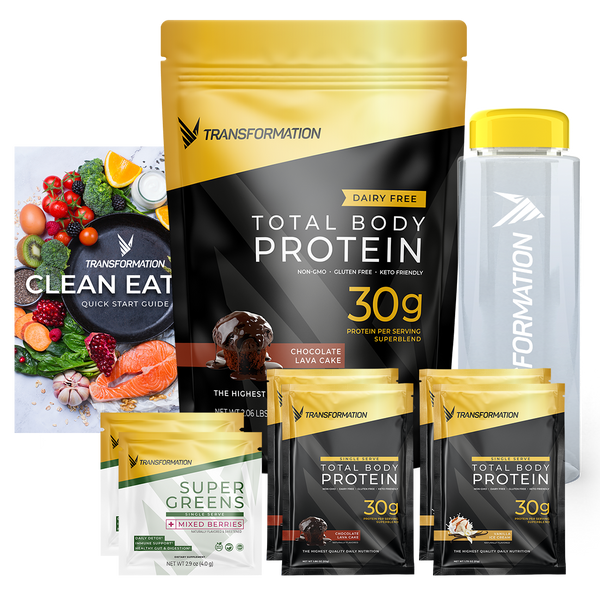
Dairy-free. No whey, no milk, no lactose.
-
30 grams of protein per two-scoop serving from a blend of pea, egg white, bovine collagen, and pumpkin seed protein.
-
Made with a digestive blend (a probiotic plus five digestive enzymes) and a fiber blend.
-
No artificial sweeteners. Sweetened with allulose, stevia, and monk fruit.
-
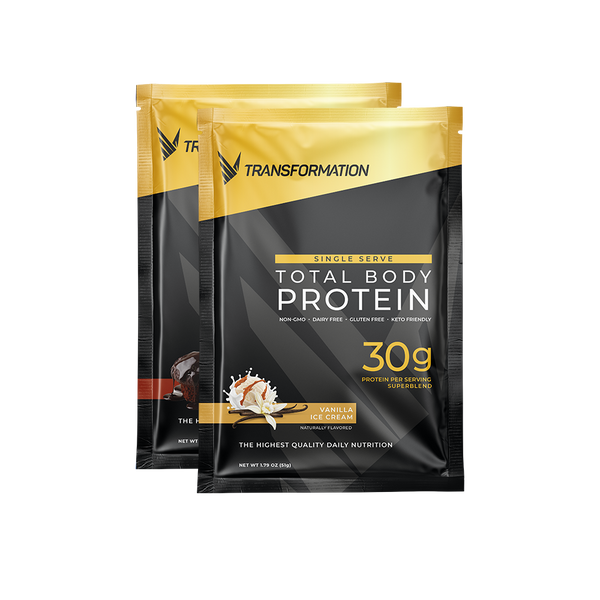
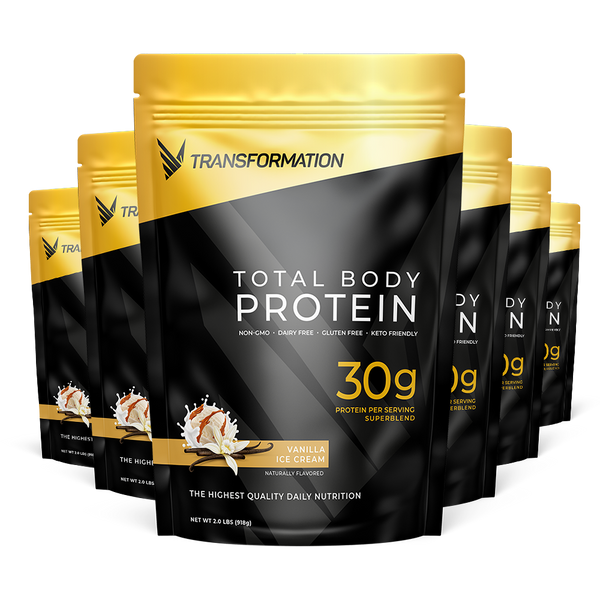
Two flavors: Chocolate Lava Cake and Vanilla Ice Cream.
One honest note: everyone's gut is different, and any change in fiber can take a few days to adjust to. If your stomach is sensitive, start with one scoop (half a serving) mixed with water or a dairy-free milk, then work up to the full two scoops. (And if you have an egg allergy, this one isn't for you, since egg white is one of our proteins.)
Frequently Asked Questions
Can you become lactose intolerant later in life? Yes. Lactase levels naturally decline with age, so many people notice symptoms as adults even if dairy never bothered them before.
Is whey isolate better for bloating than concentrate? Isolate has less lactose, so it helps some people. But it's still dairy. If isolate still leaves you bloated, a dairy-free protein removes lactose completely.
How do I stop bloating after protein shakes? Start by checking the label for dairy and sugar alcohols. Then slow down: sip instead of chugging, try a smaller serving, and mix with water instead of milk. If that doesn't help, switch to a dairy-free protein.
What protein powder is easiest to digest? It depends on what's bothering you. If dairy is the trigger, any dairy-free protein takes lactose out of the equation. From there, look for one with no artificial sweeteners.
A quick but important note: if bloating is frequent or severe, or comes with pain, changes in bowel habits, or weight loss you can't explain, talk to your doctor. Those are worth getting checked.
Ready for a Protein That Works With Your Body?
Getting enough protein shouldn't mean feeling uncomfortable every morning. If whey has been working against you, try a protein that's dairy-free from the start. Your body has changed. Your protein should too.